
IEEE 9th International Conference on Multimedia Information Processing and Retrieval (MIPR 2026) IEEE MIPR 2026
August 9–11, 2026 | Chatrium Grand Bangkok Hotel, Thailand


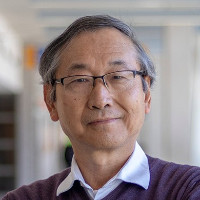
Acknowledging the tremendous contributions deep learning (DL) made to a broad range of image, video and multimedia processing tasks, further optimizing quality of the DL-based features has consistently presented a challenge, especially when working with multi-view data, arguably the most natural data format. Though DL models have been able to extract high quality features, jointly processing these features is largely confined to late fusion (score level and decision level) when information has been condensed into a few numbers, thus limiting quality of performance. In this talk, we present recent development from a significantly different perspective, a mathematics-inspired model; an approach belonging to the cooperative learning paradigm. Particularly, we call upon a natural multi-view processing architecture, discriminant correlation analysis, setting the stage for the development of an innovative platform. Due to its power to handle information with multiple views, the platform is termed as discriminant multiple correlation (DMC) analysis. Depending on the nature of the data sources to work with, DMC features two distinct designs, one with a perceptron-style NN (PNN) to handle the nonlinear processing part, and the other with a convolution-style NN (CNN). Statistics collected from experiments of numerous multi-view analysis and recognition benchmarks evidently show that the MI models generate impressive (sometimes unprecedented) performance accuracies.
Dr. Ling Guan received his Ph.D. Degree from University of British Columbia, Canada. From 1992 to 2001, he was on the Faculty of Engineering, University of Sydney, Australia. Dr. Guan served as a Tier I Canada Research Chair in Multimedia and Computer Technology and a Professor of Electrical and Computer Engineering at Ryerson University/Toronto Metropolitan University, Toronto, Canada, as well as the founding director of Ryerson/TMU Multimedia Research Lab. Dr. Guan has been working on image, video and multimedia signal processing, human-computer interaction, pattern recognition and machine intelligence, and published extensively in the field.
Recently, Dr. C.-C. Jay Kuo of University of Southern California and Dr. Guan jointly initiated Learning beyond Deep Learning to pave the way for new machine learning research which has drawn the attention of many colleagues in academia and industry. Dr. Guan served on half a dozen editorial boards of IEEE Transactions and Magazines and chaired the 2006 IEEE International Conference on Multimedia and Expo in Toronto. He played the leading role in the inauguration of IEEE Pacific-Rim Conference on Multimedia in 2000 and served as the Founding General Chair. Dr. Guan is a Life Fellow of the IEEE, a Fellow of the Canadian Academy of Engineering and the Engineering Institute of Canada. He is an IEEE Circuits and System Society Distinguished Lecturer and a recipient of the 2005 IEEE Transactions on Circuits and Systems for Video Technology Best Paper Award. Dr. Guan is the awardee of the 2014 IEEE Canada C.C. Gotlieb Medel for his contributions to computer science and engineering.

Since 1997, our exploration has been fueled by the ambition to reconstruct 3D worlds from large-scale multi-view camera arrays, giving birth to “free-viewpoint video.” For over two decades, we have refined the foundational pillars of multi-view geometry, such as camera calibration and SLAM. However, we are now entering a transformative “Next Era” where the synergy between these traditional methodologies and modern AI is redefining the boundaries of what is possible.
In this talk, I will present our journey as it evolves from early 50-camera setups to the cutting edge of AI-driven 3D vision. I will discuss how recent breakthroughs in neural rendering and generative video intelligence are unleashing the true potential of multi-view systems—moving beyond mere geometric reconstruction toward deep "Spatial Intelligence."
While these technologies have found impactful applications in fields like surgical scene analysis and Medical AR, their potential extends far beyond, promising a future where AI can perceive, understand, and interact with complex 3D environments in real-time. I will introduce our latest research projects and share my excitement for this new chapter in computer vision, where multi-view analysis serves as the cornerstone for the next generation of intelligent systems.
Hideo Saito received his Ph.D. in Electrical Engineering from Keio University, Japan, in 1992. He has been a faculty member at Keio University since then and has served as a Full Professor since 2006. From 1997 to 1999, he was a Visiting Researcher at the Robotics Institute, Carnegie Mellon University, contributing to the pioneering "Virtualized Reality" project.
He currently holds key academic leadership positions at Keio University, serving as the Chair of the School of Informatics, Management, and Human Sciences in the Graduate School of Science and Technology, as well as a Group Leader at the AI Computing and Research Center within the Keio University Global Research Institute (KGRI).
His research expertise lies in 3D computer vision and scene analysis, with a current focus on the synergy between multi-view geometry and modern AI technologies. His work spans a wide range of high-impact applications, including Augmented Reality (AR), Mixed Reality (MR), and advanced surgical scene analysis.
Dr. Saito has a distinguished record of leadership in the global academic community, having served as Program Chair for ACCV 2014, General Chair for ISMAR 2015, Program Chair for ISMAR 2016, and Scientific Program Chair for Euro VR 2020. He is a Fellow of the Institute of Electronics, Information and Communication Engineers (IEICE) and the Virtual Reality Society of Japan (VRSJ).
In addition to his university leadership, he currently serves as the President of the Institute of Image Information and Television Engineers (ITE) and is the former President of the Information and Systems Society of IEICE. His extensive contributions have been recognized with numerous accolades, including the prestigious Best Journal Paper Award at ISMAR 2023.
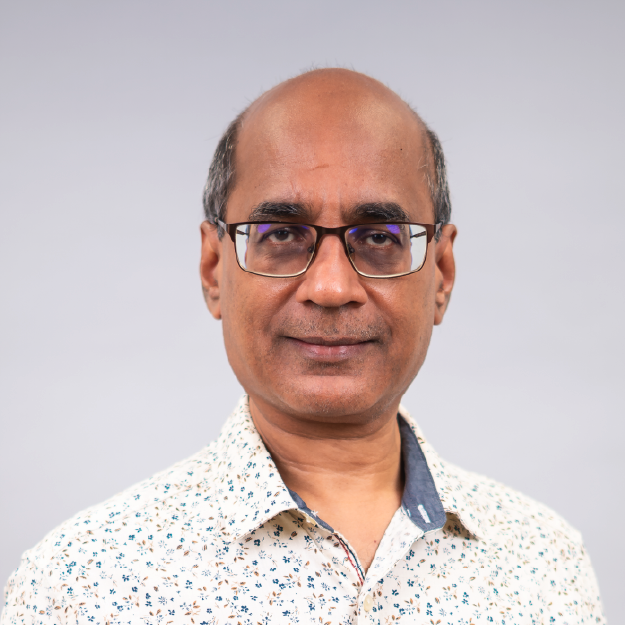
Large Language Models and Vision Language Models have seen dramatic improvements in capability over the last three years. There are multiple ongoing efforts to further enhance the capability of these models. Despite their continually improving performance on a variety of benchmarks, there are still some fundamental trust issues that hinder the wide-scale real-world deployment of these powerful multimodal models, especially in safety critical applications such as healthcare and finance. This talk will present some of the recent work done in our group at NUS that highlight these issues. We will cover the areas of bias, hallucinations and robustness. We will end the talk by detailing some of the challenges and the open research questions in the field.
Mohan Kankanhalli is Provost's Chair Professor of Computer Science at the National University of Singapore (NUS), where he is the Founding Director of the NUS AI Institute. He is also the Deputy Executive Chairman (Talent) of AI Singapore, which is Singapore’s National AI R&D Program. He has held senior leadership roles as the Dean of NUS School of Computing and Vice Provost of Graduate Education for NUS. He obtained his BTech from IIT Kharagpur and MS & PhD from the Rensselaer Polytechnic Institute. Mohan’s research interests are in Multimodal Computing, Computer Vision, and Trustworthy AI. He has made fundamental contributions in the areas of image and video understanding, visual saliency and trustworthy AI. He is the Associate Editor-in-Chief of IEEE Multimedia magazine. He is on the editorial boards of Springer Multimedia Systems and Springer Journal on Big Data. Mohan was a member of World Economic Forum's 2023-2024 Global Future Council on Artificial Intelligence. He is currently a member of ACM’s Global Technology Policy Council. He is also on the EY Global AI Advisory Council. He is a Fellow of IEEE, SNAS, IAPR and ACM.
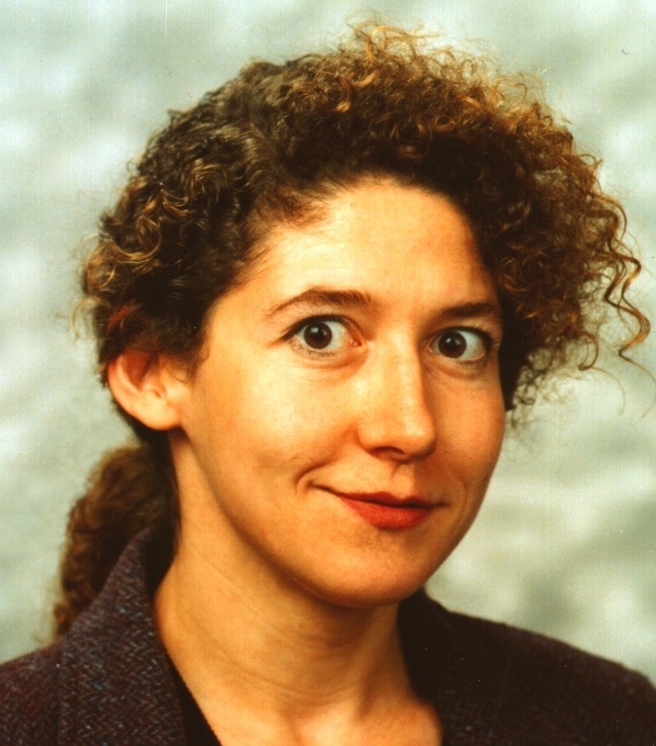
In many fields today, such as neuroscience, remote sensing, computational social science, and the physical sciences, multiple datasets are readily available. Matrix and tensor factorizations provide a principled framework for joint analysis, enabling the fusion of such datasets so that they can interact and inform each other while making relatively modest assumptions about their underlying relationships. A central motivation for these methods is the recovery of components that are directly interpretable and, in favorable settings, comparable across datasets, subjects, or measurement sessions. This naturally raises questions of reproducibility and stability of the estimated components, particularly in relation to more flexible representation learning approaches.
This talk presents an overview of matrix and tensor factorization models, with emphasis on independent component analysis and its multi-dataset extension, independent vector analysis. We discuss how these approaches identify a directly interpretable latent structure, and how resulting components can be analyzed across modalities and observations. Examples from multi-subject neuroimaging data illustrate how recurring components can be identified across individuals and used in applications such as subgroup discovery for precision medicine. We also briefly contrast these properties with those of modern deep learning methods in terms of interpretability and identifiability, and highlight remaining challenges related to robustness, model selection, and practical reproducibility.
Tülay Adali received the Ph.D. degree in Electrical Engineering from North Carolina State University, Raleigh, NC, USA, in 1992 and joined the faculty at the University of Maryland Baltimore County (UMBC), Baltimore, MD, the same year. She is currently a Distinguished University Professor in the Department of Computer Science and Electrical Engineering at UMBC and is the director of the Machine Learning for Signal Processing Lab (MLSP Lab).
Prof. Adali assisted in the organization of a number of international conferences and workshops including the IEEE International Conference on Acoustics, Speech, and Signal Processing (ICASSP), the IEEE International Workshop on Neural Networks for Signal Processing (NNSP), and the IEEE International Workshop on Machine Learning for Signal Processing (MLSP). She was the General Co-Chair, NNSP (2001–2003), MLSP 2023, Technical Chair, MLSP (2004–2008); Program Chair, MLSP (2008, 2009, and 2014), International Conference on Independent Component Analysis and Source Separation (2009); Publicity Chair, ICASSP (2000 and 2005); and Publications Chair, ICASSP 2008. She was the Technical Program Co-Chair for ICASSP 2017 and Special Sessions Chair for ICASSP 2018, ICASSP 2024, and EUSIPCO 2020. She is the Technical Program and Workshops Co-Chair for ICASSP 2026.
Prof. Adali is currently the editor-in-chief of the Signal Processing Magazine, and has served as the Chair of the IEEE Brain Technical Community, and Vice President-Technical Directions of the IEEE Signal Processing Society (SPS) for the period 2019-2022. She chaired the IEEE SPS MLSP Technical Committee (2003–2005, 2011–2013), and served or currently serving on a number of committees/boards including the SPS Conference Board (1998–2006, 2017-Present), IEEE SPS Fellow Reference Committee (2011-2014), IEEE SPS Signal Processing Theory and Methods (2010-2015) Technical Committee, and the IEEE SPS Bio Imaging and Signal Processing Technical Committee (2004–2007, 2018-Present). She was an Associate Editor for IEEE Transactions on Signal Processing (2003–2006), IEEE Transactions on Biomedical Engineering (2007–2013), IEEE Journal of Selected Areas in Signal Processing (2010-2013), and Elsevier Signal Processing Journal (2007–2010), and served on the Editorial Board of the Proceedings of the IEEE (2013-2019). She is currently serving on the Senior Editorial Board of IEEE Journal of Selected Topics in Signal Processing and the Editorial Board of Journal of Signal Processing Systems for Signal, Image, and Video Technology.
Prof. Adali is a Fellow of the IEEE, AIMBE, AAIA, a Fulbright Scholar, and an IEEE Signal Processing Society Distinguished Lecturer. She is the recipient of a 2020 Humboldt Research Award, 2013 University System of Maryland Regents' Award for Research, an NSF CAREER Award, and a number of paper awards including the 2010 IEEE Signal Processing Society Best Paper Award. Her current research interests are in the areas of statistical signal processing, machine learning, and applications in medical image analysis and fusion.