



IEEE MIPR 2026 — Industry Talk Session
Session title: Industry Talk Session ‐ "Agentic AI for Multimedia"
Date and time: Sunday, 9 August 2026, 16:20 – 17:50
Room: Ballroom
Session Chair: Yukiko Yanagawa (Omron Corporation)
Session overview
The Industry Talk Session brings together industry practitioners to share real-world applications, practical challenges, and lessons learned in applying agentic, autonomous, and intelligent systems to multimedia. Rather than promotional content, the session focuses on how these systems are actually built and deployed — what works, what breaks, and what it takes to make them reliable in production. It is intended to foster dialogue between academia and industry across the full range of multimedia and AI.
This session features three invited talks of 30 minutes each, including 5 minutes of Q&A.
Program
| Time | Speaker | Talk Title |
|---|---|---|
| 16:20 – 16:50 | Shiv Kumar Saini — (Adobe Research, Bangalore) | Multimodal Content Agents Need More Than Better Models: From Generation to Grounding and Review |
| 16:50 – 17:20 | Chenyang Lyu — (Alibaba) | Traceable Multi-Agent Workflows for Multimedia Production: From Video Editing to Multimodal Intelligence |
| 17:20 – 17:50 | Chiraphat Boonnag — (KindMore Clinic / Looloo Health) | Orchestrating Modular AI Ecosystems: Solving the Clinical Documentation and Diagnostic Crisis in Primary Care |
Speakers
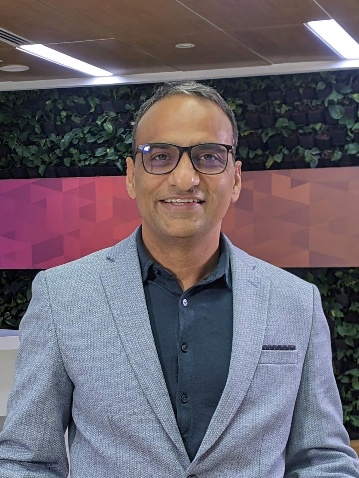
Speaker 1: Shiv Kumar Saini, Principal Research Scientist, Adobe Research, Bangalore, India
Talk title: Multimodal Content Agents Need More Than Better Models: From Generation to Grounding and Review
Abstract
Multimodal agents are rapidly moving from impressive demos to real creative and enterprise workflows. An AI system can generate an image, retrieve a document, or critique a design once. In enterprise settings, the harder problem is whether it can do these tasks reliably, repeatedly, and with enough control, grounding, and transparency to be trusted in production. This talk will discuss the practical reliability gap in multimodal AI systems through the lens of three connected capabilities: generation, retrieval, and evaluation. In creative workflows, generation must move beyond one-shot synthesis toward step-by-step, editable, instruction-following creation. Retrieval and re-ranking must identify truly relevant knowledge, assets, and examples from large enterprise repositories while filtering out plausible but distracting context. Evaluation must go beyond generic quality scores to provide actionable feedback on brand alignment, design quality, attribution, and compliance. Drawing on recent research and productization experience in enterprise multimodal content systems, I will use examples from layered design generation, agentic design review, relevance learning from representational shifts, and no-decode source attribution to illustrate how these problems can be addressed.
Key takeaways
- Reliable multimodal agents require tightly integrated generation, retrieval, and evaluation rather than stronger foundation models alone.
- Grounded retrieval and learned re-ranking are essential for improving relevance, reducing hallucinations, and enabling trustworthy enterprise workflows.
- Actionable evaluation and review systems are critical for ensuring design quality, brand alignment, attribution, and compliance at production scale.
Bio
Dr. Shiv Kumar Saini is a Principal Research Scientist at Adobe Research, Bangalore, where he leads research on enterprise AI systems, agentic AI, conversational data analytics, and efficient foundation-model systems. His current work focuses on making AI agents more reliable and useful in real-world enterprise settings, including problems in multimodal retrieval, semantic re-ranking, evaluation coverage, memory, and system efficiency. At Adobe, Shiv has worked on research problems spanning enterprise RAG, natural-language-to-SQL systems, agent evaluation, token and context optimization, KV-cache reuse, and AI assistants for digital documents and customer-experience workflows. His research interests lie at the intersection of machine learning, information retrieval, intelligent systems, and practical deployment of AI technologies. His broader research agenda is centered on building trustworthy, efficient, and scalable AI systems that can reason over enterprise knowledge, multimedia content, and user context.
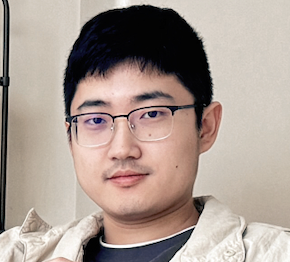
Speaker 2: Chenyang Lyu, Staff Researcher and Tech Lead, Alibaba, China
Talk title: Traceable Multi-Agent Workflows for Multimedia Production: From Video Editing to Multimodal Intelligence
Abstract
Recent advances in multimodal large language models have created new possibilities for automating complex multimedia production. Yet long-form video editing remains challenging: it requires coordinated material sourcing, multimodal understanding, narrative planning, tool execution, and quality control over extended workflows. In this talk, I will present Crayotter, a multimodal, multi-agent system that transforms a natural-language request into a complete edited video through a traceable and controllable production process. Crayotter organizes video production into three stages. It first constructs and executes a dependency-aware plan for sourcing, downloading, and analyzing multimodal materials. Specialized reasoning processes then develop narrative, visual, pacing, and narration strategies and consolidate them into a structured editing blueprint. Finally, an editing agent executes the blueprint using tools for clip selection, cutting, transitions, speech synthesis, subtitles, audio mixing, and export. Resource-aware scheduling, checkpointing, and failure recovery support efficient and robust execution. Beyond video editing, Crayotter illustrates a broader approach to multimodal intelligence: combining the flexible reasoning of foundation models with explicit workflow structure and deterministic tool control. Our broader explorations also investigate reinforcement learning from tool-interaction trajectories and execution feedback to improve agents’ editing decisions, tool use, and long-horizon reliability. Full execution logs and visual trace analysis make intermediate decisions inspectable, enabling debugging, human review, iterative improvement, and future agent learning. I will discuss the system’s design, practical lessons, current limitations, and implications for building reliable and continually improving multi-agent workflows for multimedia creation.
Key takeaways
- Reliable multimedia agents need explicit, traceable workflows to support inspection, control, and recovery.
- Separating multimodal preparation, planning, and tool execution enables robust long-form video production.
- Reinforcement learning can leverage tool-interaction trajectories and execution feedback to improve agents’ editing decisions and long-horizon reliability.
Bio
Dr. Chenyang Lyu is a Staff Researcher and Tech Lead at Alibaba, where he leads applied research on speech and omni-modal Large Language Models. He received his Ph.D. in Machine Learning from Dublin City University in 2023. His research focuses on building capable and reliable language-model systems across multilingual, multimodal, and speech settings, with a growing emphasis on multi-agent collaboration, tool use, and automated multimedia production. His work has been published at leading conferences in natural language processing and multimedia, including ACL, EMNLP, NeurIPS, and ACM Multimedia.
Links: Personal page: https://lyuchenyang.github.io
Speaker 3: Chiraphat Boonnag, Medical Director, KindMore Clinic; Lead AI Healthcare Specialist, Looloo Health, Thailand

Talk title: Orchestrating Modular AI Ecosystems: Solving the Clinical Documentation and Diagnostic Crisis in Primary Care
Abstract
The modern healthcare system is facing an operational crisis driven by heavy administrative burdens and high cognitive load on frontline physicians. Doctors spend a substantial portion of their day charting, navigating Electronic Medical Record (EMR) systems, and searching for ICD-10 codes—leading to severe burnout and less time for actual patient care. While end-to-end "agentic" architectures dominate recent tech industry hype, the strict safety and compliance requirements of live clinical operations often demand a more deterministic, reliable, and decoupled multi-model approach. This session presents a real-world case study of how a primary care clinic built and deployed a modular AI ecosystem to streamline the entire consultation lifecycle. Instead of relying on a single autonomous agent, the system orchestrates a pipeline of discrete, specialized AI models running independently to solve specific clinical bottlenecks. We will walk through this live operational workflow: beginning with an ambient AI medical scribe that processes multi-speaker, bilingual audio into structured clinical summaries, followed by separate, dedicated downstream models that generate differential diagnoses, suggest evidence-based drug treatments, and recommend precise ICD-10 codes for billing. The talk will candidly share the technical and operational "breaking points" of managing an ensemble of disconnected models in production. We will discuss strategies for preventing error compounding across model boundaries, ensuring clinical guideline compliance at each node, and optimizing infrastructure to handle cumulative latency during sequential inferences. By leading with the clinical problem first, this presentation provides a pragmatic blueprint for building trustworthy, multi-model AI infrastructure that delivers immediate, measurable relief to frontline clinicians.
Key takeaways
- The Case for Decoupled AI: Why a modular pipeline of specialized, task-specific models provides greater reliability, predictability, and safety in vertical medical domains than a single monolithic agent.
- Orchestrating the Consultation Lifecycle: How to seamlessly pass data between distinct AI systems—ambient scribe, differential diagnosis, pharmaceutical suggestions, and ICD-10 coding—within a unified clinician workflow.
- Mitigating Compound Production Friction: Practical engineering strategies to handle the cumulative latency and data alignment challenges of running multiple separate AI models sequentially in a fast-paced clinic.
Bio
Dr. Chiraphat Boonnag is a physician, the Medical Director of KindMore Clinic, and the Lead AI Healthcare Specialist at Looloo Health. Operating at the intersection of medical practice, digital health, and clinical informatics, he focuses on transforming healthcare operations through modular AI systems and data-driven clinic management. His recent work centers on deploying scalable, multi-model AI ecosystems—spanning ambient documentation, clinical decision support, and automated medical coding—designed to drastically reduce administrative burdens and eliminate physician burnout in primary care settings.
Links: LinkedIn profile: https://www.linkedin.com/in/cboonnag/